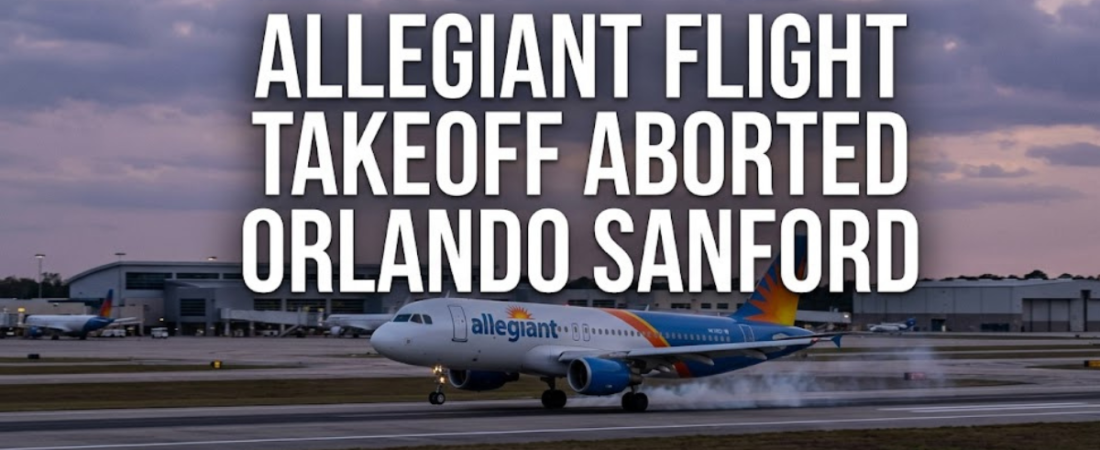
Few moments make airline passengers more anxious than feeling a plane suddenly stop during takeoff. News involving an Allegiant flight takeoff aborted Orlando Sanford quickly caught attention online because aborted takeoffs sound dramatic — and for passengers onboard, they can certainly feel intense.
But here’s the important thing to understand:
In aviation, an aborted takeoff is often a sign that safety systems and pilot training are working exactly as intended.
Modern commercial aviation relies heavily on strict safety procedures. When pilots detect something unusual during takeoff, they are trained to stop the aircraft immediately if necessary. While the experience can be unsettling, rejected or aborted takeoffs are part of standard airline safety operations.
In this article, we’ll explain:
- What an aborted takeoff means
- Why it may happen
- How pilots respond
- What passengers typically experience
- Orlando Sanford Airport’s role
- Common aviation safety procedures
- Frequently asked questions
If you’ve searched for information about the Allegiant flight takeoff aborted Orlando Sanford incident, this guide provides a clear and easy-to-understand overview.
What Is an Aborted Takeoff?
An aborted takeoff — also called a rejected takeoff — happens when pilots stop the aircraft before it fully leaves the runway.
This usually occurs because:
- A warning indicator appears
- A mechanical issue is detected
- Pilots notice abnormal aircraft behavior
- Air traffic conditions change suddenly
- Another safety concern emerges
The aircraft remains on the ground while pilots assess the situation.
Why Airlines Abort Takeoffs
Commercial aviation prioritizes safety above all else.
Pilots are trained to stop takeoff immediately if they detect:
- Engine irregularities
- Tire problems
- Warning system alerts
- Flight control issues
- Unsafe runway conditions
In many situations, aborting the takeoff is the safest decision available.
Allegiant Flight Takeoff Aborted Orlando Sanford Incident
Reports involving an Allegiant flight at Orlando Sanford International Airport generated public interest because passengers experienced a sudden stop during the departure process.
While every incident differs slightly, aviation experts generally explain that:
- Pilots follow strict emergency procedures
- Aircraft are designed for these situations
- Safety systems monitor takeoff performance constantly
Passengers may experience strong braking and sudden deceleration during an aborted takeoff.
What Passengers Usually Experience During an Aborted Takeoff
For travelers, the event can feel alarming because takeoff acceleration happens quickly.
Common Passenger Experiences
- Sudden braking
- Loud engine changes
- Aircraft slowing abruptly
- Crew instructions afterward
- Delays while inspections occur
Although stressful, these procedures are carefully practiced by flight crews.
Why Aborted Takeoffs Are Part of Aviation Safety
Many people assume an aborted takeoff means disaster was narrowly avoided. Sometimes that’s true, but often it simply means:
- A warning system detected something unusual
- Pilots chose caution
- Standard safety protocols worked correctly
Modern aviation systems are intentionally designed to identify issues early.
Pilot Training for Rejected Takeoffs
Commercial pilots regularly train for aborted takeoff scenarios in simulators.
Training includes:
- High-speed runway stops
- Engine failure simulations
- Emergency communication
- Passenger safety procedures
This preparation helps pilots react quickly under pressure.
How Aircraft Safety Systems Work
Today’s commercial aircraft contain advanced monitoring systems.
These systems constantly track:
- Engine performance
- Brake systems
- Flight controls
- Hydraulic systems
- Aircraft speed
If abnormalities appear during takeoff, pilots may decide to stop immediately.
What Happens After an Aborted Takeoff?
Once the aircraft stops safely, crews follow detailed inspection procedures.
Typical Next Steps
- Aircraft inspection
- Communication with air traffic control
- Passenger updates
- Maintenance review
- Possible aircraft change or delay
Safety checks must happen before the flight can continue.
Orlando Sanford International Airport Overview
Orlando Sanford International Airport is a major airport for low-cost and leisure-focused carriers, especially Allegiant Air.
The airport is known for:
- Vacation travel
- Florida tourism
- Domestic routes
- Budget airline operations
Because of Allegiant’s strong presence there, any operational incident often receives significant public attention.
Are Aborted Takeoffs Common?
They are not everyday events, but they are also not extremely rare.
Airlines worldwide occasionally perform rejected takeoffs due to:
- Technical alerts
- Runway hazards
- Weather concerns
- Aircraft system warnings
Commercial aviation remains one of the safest forms of transportation globally.
Why Passengers Should Stay Calm
The most important thing passengers can do during any aviation irregularity is:
- Stay seated
- Follow crew instructions
- Remain calm
Flight crews are trained extensively for unexpected situations.
How Aviation Safety Has Improved Over Time
Modern aviation safety standards are stronger than ever thanks to:
- Better aircraft technology
- Advanced pilot training
- Real-time monitoring systems
- Improved maintenance procedures
Events like aborted takeoffs demonstrate how layered safety systems work together.
Common Causes of Rejected Takeoffs
Although exact details vary, frequent causes include:
Mechanical Warnings
- Engine alerts
- Brake concerns
- Sensor warnings
Environmental Conditions
- Debris on runway
- Weather issues
- Bird strikes
Operational Factors
- Incorrect system readings
- Air traffic conflicts
- Performance concerns
Pilots are trained to react conservatively whenever uncertainty exists.
Passenger Rights After Flight Delays
After an aborted takeoff, passengers may experience delays or schedule changes.
Depending on airline policies and circumstances, travelers may receive:
- Rebooking assistance
- Flight updates
- Meal vouchers in extended delays
- Alternative flight arrangements
Passengers should monitor official airline communication channels for updates.
How to Check Flight Updates
Travelers can monitor updates through:
- Allegiant Air Official Website
- Airport departure boards
- Airline mobile apps
- Customer service notifications
Real-time updates help reduce uncertainty during travel disruptions.
FAQs About Allegiant Flight Takeoff Aborted Orlando Sanford
What does an aborted takeoff mean?
It means pilots stopped the aircraft before liftoff due to a safety concern or warning.
Is an aborted takeoff dangerous?
While it can feel alarming, aborted takeoffs are standard safety procedures designed to protect passengers.
Why would a pilot reject takeoff?
Pilots may detect mechanical warnings, runway hazards, weather issues, or other safety concerns.
What happens after an aborted takeoff?
The aircraft is inspected, maintenance crews assess the issue, and passengers receive updates about delays or rebooking.
Are pilots trained for aborted takeoffs?
Yes. Commercial pilots regularly practice rejected takeoff procedures in flight simulators.
Is flying still safe after incidents like this?
Yes. Commercial aviation remains one of the safest transportation systems in the world.
Where can I check Allegiant flight updates?
Passengers can check updates on the official Allegiant website or mobile app.
Conclusion
The Allegiant flight takeoff aborted Orlando Sanford incident understandably raised concern among travelers, but events like these also highlight how seriously the aviation industry takes safety. Pilots, aircraft systems, maintenance crews, and airport operations all work together to identify problems early and respond quickly when something doesn’t look right.
Although an aborted takeoff can feel stressful for passengers, it is often evidence that aviation safety procedures are functioning exactly as intended. Modern aircraft and trained flight crews are built around the principle of caution and prevention.
For travelers, staying informed, following crew instructions, and understanding how aviation safety works can make situations like this feel far less intimidating. In most cases, an aborted takeoff is not a sign of failure — it’s a sign that the system is prioritizing safety first.