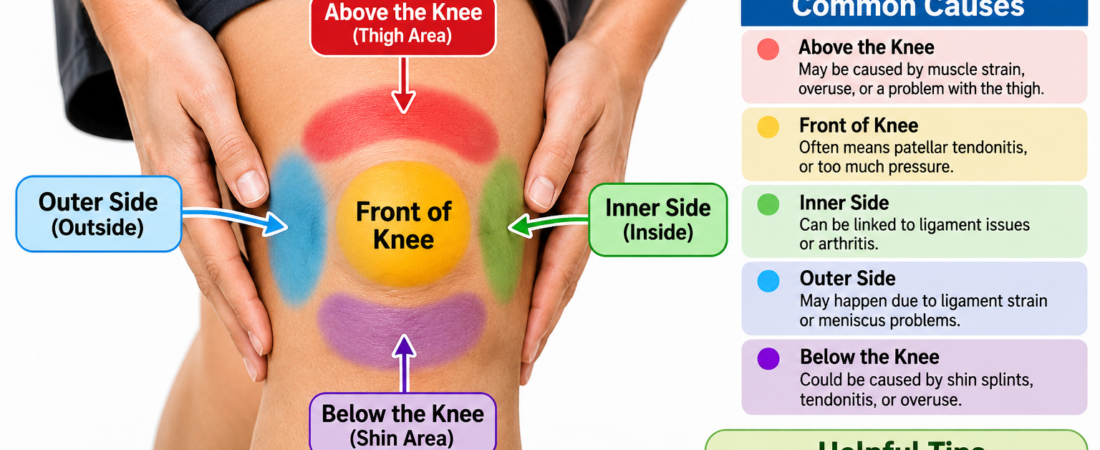
Knee pain can make simple activities feel difficult. Walking, climbing stairs, running, and even sitting can become uncomfortable. However, the exact location of your pain can offer useful clues. Some people feel pain above their kneecap, while others experience discomfort behind or beside the joint. Understanding these differences can help you describe your symptoms more clearly.
A knee pain location chart is a helpful starting point for understanding common knee problems. It connects different pain locations with possible injuries and health conditions. For example, front knee pain may involve the kneecap or nearby tendons. Inner knee pain can sometimes involve cartilage or ligaments. Meanwhile, pain behind the knee may relate to swelling or muscle problems.
This guide explains each knee area in simple language. You will learn about common causes, warning signs, treatment options, and prevention tips. Remember that a chart cannot confirm a medical diagnosis. A healthcare professional can identify the actual cause through an examination.
What Is a Knee Pain Location Chart?
A knee pain location chart is a simple guide showing different areas of the knee. It helps people understand where discomfort occurs and which conditions might cause it. The chart usually divides the knee into four main areas. These include the front, back, inner side, and outer side. Each area contains different tissues, including bones, muscles, tendons, ligaments, and cartilage.
Doctors often ask patients to point toward their painful areas. They also ask about swelling, stiffness, movement, and recent injuries. These details help narrow down possible causes. For example, someone experiencing pain while climbing stairs may have a different problem. Their symptoms may differ from someone experiencing sudden pain after twisting their knee. Therefore, location is only one part of understanding knee discomfort. The duration, intensity, and other symptoms matter too. Use this guide to learn about common possibilities, not to diagnose yourself.
Knee Pain Location Chart: Quick Reference Table
The following table provides an easy overview of common knee pain locations. It connects each area with possible causes and related symptoms. These conditions are examples, not confirmed explanations for your discomfort. Several knee problems can produce similar symptoms. Some conditions can also cause pain in multiple areas.
| Pain location | Possible causes | Common symptoms |
| Front of knee | Patellofemoral pain, bursitis | Pain around kneecap |
| Above kneecap | Quadriceps tendinitis | Pain when straightening |
| Below kneecap | Patellar tendinitis | Pain during jumping |
| Inner knee | MCL injury, meniscus tear, arthritis | Inner-side tenderness |
| Outer knee | IT band syndrome, LCL injury | Outer-side pain |
| Back of knee | Baker’s cyst, muscle strain | Tightness or swelling |
| Deep inside knee | Meniscus injury, arthritis | Locking or stiffness |
| Around entire knee | Arthritis or inflammation | General pain and swelling |
A knee pain location chart works best when combined with your personal symptoms. Notice when the pain begins and what makes it worse. Also, check whether your knee feels warm, swollen, weak, or unstable. These details can help a healthcare professional understand your condition.
Understanding Basic Knee Anatomy
Your knee is a large joint that connects your thigh bone with your shinbone. It also includes the kneecap, which protects the front portion. Several strong ligaments help keep the joint stable. These ligaments include the ACL, PCL, MCL, and LCL. Each one supports the knee during different movements. Cartilage helps the bones move smoothly against each other. Menisci are two pieces of cartilage that cushion the joint and absorb pressure.
Muscles and tendons also play important roles. The quadriceps muscles help straighten your knee. Hamstring muscles help bend it. Tendons connect muscles with bones and support movement. Small fluid-filled sacs called bursae reduce friction around the joint. When any of these structures become irritated or injured, discomfort can develop. Knowing basic knee anatomy makes it easier to understand why different pain locations matter. It also explains why similar symptoms can have different causes.
1. Front Knee Pain: Pain Around the Kneecap
Possible medical term: Anterior knee pain
Front knee pain happens around or behind the kneecap. It can feel like a dull ache, sharp pain, or pressure. Some people notice it when climbing stairs or standing after sitting. Others experience discomfort during squats, running, or jumping. One common cause is patellofemoral pain syndrome. This condition affects the area where the kneecap meets the thigh bone. It often develops after repeated stress or changes in activity.
Other possible causes include bursitis and cartilage irritation. These problems can produce tenderness and swelling around the front joint. A knee pain location chart can help you identify this area. However, it cannot tell which structure is causing the problem. Avoid movements that sharply increase your pain. Gentle activity may remain comfortable, depending on your symptoms. Seek professional advice if discomfort continues or affects everyday movement.
2. Pain Above the Kneecap
Pain above the kneecap often involves the quadriceps tendon. This tendon connects your thigh muscles to the kneecap. Repeated jumping, running, or heavy exercise can irritate it. This problem is sometimes called quadriceps tendinitis or tendinopathy. The pain may become stronger when straightening your leg. You might also notice tenderness just above the kneecap. Some people experience discomfort when climbing stairs or rising from a chair.
Sudden injuries can also affect this area. A severe tendon injury may cause weakness or difficulty straightening the knee. Do not ignore these symptoms after an accident. Resting from painful activities may help reduce irritation. However, complete inactivity is not always necessary. A medical professional can recommend suitable exercises and treatment. If you cannot straighten your knee after an injury, seek prompt medical care.
3. Pain Below the Kneecap
Pain below the kneecap can involve the patellar tendon. This tendon connects the kneecap to the shinbone. It helps your leg straighten during movement. Patellar tendinopathy is common among people who perform repeated jumping activities. Basketball, volleyball, and running can place repeated stress on this tendon. The pain may begin during exercise and continue afterward.
You may notice tenderness between your kneecap and shinbone. Squatting, jumping, and climbing stairs can increase discomfort. Some people describe the pain as sharp or burning. A sudden increase in exercise can also trigger symptoms. Try reducing activities that make the pain worse. Return to exercise gradually when comfortable. A physiotherapist can help develop a safe strengthening plan. Persistent pain deserves professional attention, especially when it affects walking or normal daily activities.
4. Inner Knee Pain: Pain on the Medial Side
Possible medical term: Medial knee pain
Inner knee pain occurs along the side facing your other leg. It may develop after twisting, falling, or changing direction quickly. One possible cause is an MCL injury. The medial collateral ligament helps stabilize the inner knee. A meniscus tear can also produce pain in this area. Arthritis may cause gradual discomfort along the inner joint line.
You might experience swelling, tenderness, or stiffness. Some people notice clicking or catching during movement. Pain may become worse while walking or turning. A knee pain location chart helps show where medial knee pain develops. However, a physical examination is needed to identify its cause. Avoid twisting movements when they increase discomfort. If your knee feels unstable or becomes heavily swollen, seek medical attention. Early assessment can help prevent further problems.
5. Outer Knee Pain: Pain on the Lateral Side
Possible medical term: Lateral knee pain
Outer knee pain develops along the side facing away from your other leg. Runners and cyclists sometimes experience this problem. One possible cause is iliotibial band syndrome. The iliotibial band is a strong strip of tissue running along your outer thigh. Repeated movement can irritate tissues near the outer knee. This may cause sharp discomfort during exercise.
Other possible causes include LCL injuries and meniscus problems. An LCL injury affects a ligament supporting the outer knee. You may notice tenderness, swelling, or difficulty moving comfortably. Pain can become worse when bending or straightening your leg. Reduce activities that trigger symptoms until you understand the cause. Avoid pushing through sharp pain. A healthcare professional can check your movement and stability. They may recommend physical therapy or other suitable treatment.
6. Back of Knee Pain
Possible medical term: Posterior knee pain
Pain behind the knee can develop for several reasons. One possible cause is a Baker’s cyst. This is a fluid-filled swelling that forms behind the joint. It may create tightness, pressure, or a noticeable lump. Arthritis and meniscus problems can sometimes contribute to this swelling. Tight hamstring or calf muscles may also cause discomfort.
Some people experience back knee pain while bending their legs. Others notice it when walking or straightening the joint. Swelling behind the knee deserves medical attention, especially when it persists. Sudden calf swelling, warmth, or pain also needs urgent assessment. These symptoms can sometimes indicate a blood clot. Do not massage a suddenly swollen or painful calf. Seek urgent medical care to rule out serious causes. A proper examination helps identify the source of discomfort.
7. Deep Knee Joint Pain
Deep knee pain feels as if discomfort comes from inside the joint. You may struggle to identify one exact painful spot. This type of pain can involve cartilage, menisci, or joint surfaces. Osteoarthritis is one possible cause. It happens when joint cartilage gradually wears down. Meniscus injuries can also produce deep discomfort, especially after twisting movements.
Common symptoms include stiffness, swelling, and difficulty bending. Some people experience clicking, catching, or locking sensations. These symptoms may become worse after physical activity. However, deep pain does not always mean serious damage. Several conditions can produce similar feelings. Avoid activities that sharply increase discomfort. Keep track of changes in movement and swelling. A medical examination can help determine whether imaging or physical therapy is needed.
8. Knee Pain on Both Sides
Some people experience pain along both sides of their knees. This may affect one knee or both knees. Arthritis is one possible cause, especially when discomfort develops gradually. Overuse can also irritate tissues surrounding the joint. Changes in exercise, long walks, or repeated squatting may contribute. Certain injuries can affect multiple knee structures too.
You might notice stiffness after resting. Pain may also increase during long periods of walking. Some people experience swelling or reduced movement. A knee pain location chart helps compare the inner and outer areas. However, symptoms affecting both sides need individual assessment. Both knees may have different problems. Avoid assuming that matching symptoms always have one cause. A healthcare professional can review your activity levels, medical history, and movement patterns.
9. Common Causes of Knee Pain
Knee pain can develop after an injury or through gradual wear. Sports activities sometimes cause ligament and meniscus injuries. Repeated movements can irritate tendons and surrounding tissues. Arthritis may cause ongoing pain, stiffness, and swelling. Bursitis develops when small fluid-filled sacs become irritated. Muscle weakness can also affect knee movement and joint support.
Other causes include gout and joint infections. These conditions may produce sudden pain and swelling. Infections can become serious without quick treatment. Knee problems can also involve nearby body areas. For example, hip problems sometimes cause pain that feels like it comes from the knee. Your age, activity level, previous injuries, and general health matter. Identifying the cause requires more than checking one painful location. A healthcare professional can examine your knee and recommend suitable tests.
10. Symptoms That Can Help Identify Knee Problems
Pain location is useful, but other symptoms provide important clues. Swelling may develop after an injury or inflammation. Stiffness can make bending and straightening difficult. Weakness may cause your knee to feel unstable. Some people hear clicking or popping during movement. However, painless clicking alone does not always indicate an injury.
Pay attention to when symptoms begin. Pain during exercise may suggest a different problem from pain at rest. Discomfort after sitting can occur with certain kneecap conditions. Sudden swelling after an injury needs prompt assessment. Fever with a hot, swollen knee can indicate infection. A knee pain location chart becomes more useful when you record these additional details. Write down your symptoms and activities. This information can help your healthcare professional make a more accurate assessment.
11. How Doctors Diagnose Knee Pain
A doctor usually begins by asking about your symptoms. They may ask when the pain started and what makes it worse. They will also check your knee movement, strength, and stability. You may need to walk, bend, or straighten your leg during the examination. These simple movements can provide useful information. Your doctor may also check for swelling, tenderness, and warmth.
Sometimes, additional tests are needed. An X-ray can help identify bone problems and arthritis. An MRI can show damage to ligaments, cartilage, and other soft tissues. Ultrasound may help examine tendons or fluid-filled swelling. Blood tests may be useful when infection or inflammatory arthritis is suspected. Not everyone needs every test. Your symptoms and examination findings guide the next steps. Sharing an accurate symptom history can make the diagnosis process easier.
12. Treatment Options for Different Knee Pain Locations
Treatment depends on the cause, severity, and duration of your knee pain. Mild problems may improve with rest and simple home care. Ice wrapped in a towel can help reduce swelling. Apply it for around 15–20 minutes at a time. Avoid placing ice directly against your skin. Gentle movement may help prevent stiffness when comfortable.
Physical therapy can improve strength, flexibility, and joint movement. A physiotherapist may suggest exercises for your quadriceps and hamstrings. Some people need supportive braces or walking aids. Pain medicines may help certain people, but they are not suitable for everyone. Ask a healthcare professional or pharmacist before using them. Serious injuries may require specialist treatment or surgery. A knee pain location chart cannot select the right treatment by itself. Always match treatment with a proper medical assessment.
13. Simple Home Care Tips for Knee Pain
Small changes can make everyday movement easier. Start by reducing activities that increase your pain. Avoid running, jumping, or deep squats when they cause discomfort. You can try shorter walks instead of long walking sessions. Rest your knee between activities when needed. Elevating your leg may also help with mild swelling.
Ice wrapped in a towel can provide temporary relief. Avoid keeping ice against one area for too long. Gentle stretching may help when your muscles feel tight. Do not force movements through sharp pain. Supportive shoes can improve comfort during walking. If your symptoms continue, arrange a medical examination. Home care is not a replacement for professional treatment. Seek urgent help for severe swelling, major injuries, fever, or an inability to bear weight.
14. Exercises That May Support Healthy Knees
Regular movement can help support the muscles around your knees. Strong muscles provide better support during daily activities. Walking on flat ground may be suitable for some people. Swimming and water exercises offer movement with less joint impact. Stationary cycling can also help maintain leg movement when comfortable.
Simple strengthening exercises may include straight-leg raises and gentle quadriceps contractions. However, the right exercises depend on your condition. Someone with a fresh ligament injury needs different guidance. Start slowly and avoid movements that increase your symptoms. A physiotherapist can teach you safe exercise techniques. They can also adjust your routine as your strength improves. Stop exercising if you experience sudden pain, instability, or increased swelling. Consistency matters more than intense workouts. Healthy movement should support your recovery rather than make your symptoms worse.
15. When Should You See a Doctor for Knee Pain?
Not every knee ache requires emergency treatment. However, certain symptoms should never be ignored. Seek prompt medical attention after a serious injury. This is especially important when your knee looks deformed or swells quickly. You should also seek urgent care if you cannot stand or walk safely. A knee that locks or cannot straighten needs medical assessment.
A hot, red, and swollen knee with fever may indicate infection. This requires urgent medical attention. Sudden calf swelling, warmth, and pain also need urgent assessment. These symptoms can sometimes indicate a blood clot. Arrange a regular appointment when pain lasts several days. You should also seek help when discomfort affects sleep or daily activities. Early assessment can prevent some problems from becoming worse. Never delay emergency care because a chart suggests a minor condition.
16. How to Prevent Future Knee Pain
Healthy habits can help reduce unnecessary stress on your knees. Begin physical activities with a gentle warm-up. Increase exercise intensity gradually instead of making sudden changes. Use suitable shoes for walking, running, and sports. Give your body enough time to recover after demanding activities. Avoid repeating painful movements without proper rest.
Strengthening your thigh and hip muscles can improve joint support. Gentle flexibility exercises may also help maintain comfortable movement. If you participate in sports, learn safe movement techniques. Avoid playing through serious pain or swelling. Maintaining a healthy body weight may reduce pressure on your knee joints. However, prevention cannot eliminate every injury. Accidents and medical conditions can still cause discomfort. Pay attention to early warning signs. Taking action early can help protect your mobility and everyday comfort.
17. How to Use a Knee Pain Location Chart Correctly
Start by identifying the exact area where you feel discomfort. Is it around your kneecap, behind your knee, or along one side? Next, notice whether the pain feels sharp, dull, burning, or aching. Check whether bending, walking, or climbing stairs changes your symptoms. Also, look for swelling, redness, bruising, or unusual warmth. These details help create a clearer picture of your problem.
A knee pain location chart can help organize these observations. For example, you may notice inner knee pain after twisting your leg. Another person may experience front knee pain after repeated jumping. Both situations need different assessments. Write down when the discomfort started and how often it happens. Share this information with your healthcare professional. Do not use a chart to choose medicines or diagnose an injury. Its main purpose is to improve understanding and communication.
18. Important Questions to Record Before Your Appointment
Preparing a few details before your appointment can save time. First, identify the exact location of your discomfort. Explain whether the pain started suddenly or developed slowly. Mention any recent falls, sports activities, or unusual movements. Tell your doctor whether walking or bending makes it worse. Also, describe any swelling, stiffness, clicking, or weakness.
Keep track of activities that make your symptoms better or worse. Mention whether the pain affects your sleep or work. Share information about previous knee injuries and treatments. If you use any medicines, include their names. You can also write down your questions before the visit. These simple steps help your doctor understand your experience. They also make it easier to discuss possible tests and treatment choices. Clear communication is an important part of good healthcare.
Quick Article Information Table
| Detail | Information |
| Article topic | Knee pain location chart |
| Main subject | Knee pain locations and causes |
| Body area | Knee joint |
| Main pain areas | Front, back, inner, and outer |
| Common conditions | Arthritis, meniscus tears, tendon injuries |
| Common symptoms | Pain, swelling, stiffness, weakness |
| Diagnosis methods | Physical examination and medical imaging |
| Treatment options | Rest, physical therapy, medicines, surgery |
| Suitable audience | Adults, athletes, and general readers |
| Medical category | Orthopedics and joint health |
| Content purpose | Educational health information |
| Medical review | Not individually reviewed by a doctor |
| Last updated | November 3, 2026 |
Conclusion:
Knee pain can affect your comfort, movement, and everyday activities. Understanding its location is a useful first step. A knee pain location chart helps explain possible causes around different parts of the joint. Front, back, inner, and outer knee pain can have different explanations. However, similar symptoms may come from different conditions. Never depend on a chart for a final diagnosis.
Pay attention to your symptoms and avoid activities that make them worse. Seek medical advice when pain continues or affects your daily routine. Get urgent care for serious injuries, sudden swelling, fever, or difficulty bearing weight. Taking care of your knees today can support better movement tomorrow. Share this guide with someone who wants to understand knee discomfort.
Frequently Asked Questions (FAQs)
1. What does a knee pain location chart show?
A knee pain location chart shows different areas where knee discomfort can develop. It usually includes the front, back, inner, and outer sides. Each location may connect with different injuries or health conditions. For example, front knee pain can involve the kneecap. Back knee pain may involve a Baker’s cyst. However, these are only possible causes. A healthcare professional must examine your knee to identify the actual problem.
2. What causes pain at the front of the knee?
Front knee pain can have several causes. Patellofemoral pain syndrome is one common possibility. It affects the area around the kneecap. Bursitis and tendon problems can also cause discomfort. You may notice pain while climbing stairs, squatting, or standing after sitting. Reducing painful activities may help temporarily. However, persistent pain needs professional assessment. A doctor can identify the cause and recommend suitable treatment.
3. What does pain on the inside of the knee mean?
Pain on the inner side of your knee may involve several structures. These include the medial collateral ligament and meniscus. Arthritis can also cause discomfort in this area. Some people experience swelling, stiffness, or tenderness. Pain may become worse when walking or turning. A twisting injury can sometimes damage inner knee structures. A physical examination can help identify the problem and guide treatment.
4. Why does the back of my knee hurt?
Pain behind your knee can develop because of different conditions. A Baker’s cyst is one possible cause. It creates fluid-filled swelling behind the joint. Muscle tightness, arthritis, and meniscus injuries can also contribute. You might notice pressure, stiffness, or difficulty bending your leg. Sudden calf swelling, warmth, or pain needs urgent medical attention. A healthcare professional can check for serious causes and recommend appropriate care.
5. When should I worry about knee pain?
You should take knee pain seriously when it affects normal movement. Severe pain after an injury needs prompt medical attention. Sudden swelling, visible deformity, or inability to bear weight also requires urgent care. A hot, red, swollen knee with fever may indicate infection. Arrange a medical appointment for pain that continues or affects sleep. Early assessment can help identify the cause and prevent further complications.
6. Can knee pain improve without surgery?
Yes, many knee problems improve without surgery. Treatment may include activity changes, physical therapy, and suitable medicines. Gentle exercises can strengthen muscles around the joint. Ice may also help manage temporary swelling. However, treatment depends on the actual condition. Some serious injuries may require surgery. Never start an intense exercise routine without understanding your symptoms. A healthcare professional can recommend the safest treatment plan.