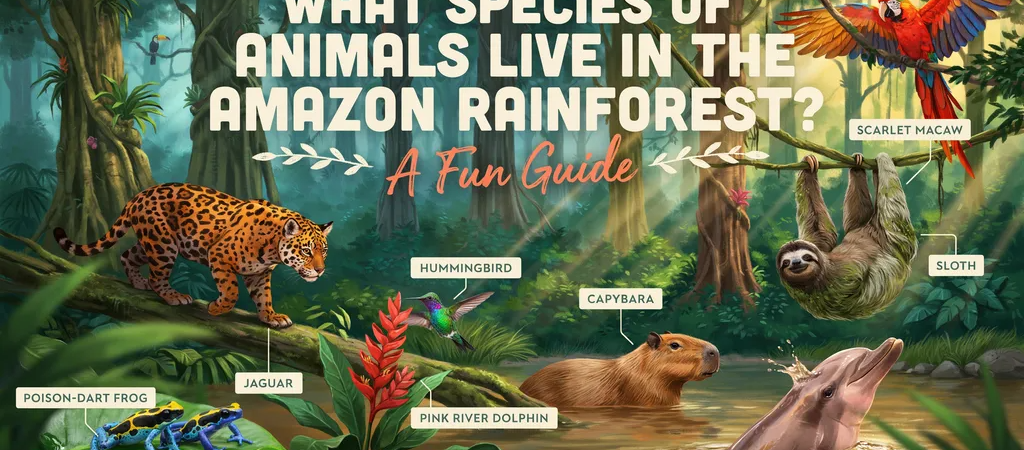
Have you ever wondered What Species of Animals Live in the Amazon Rainforest? It is a giant, green wonderland packed with life. When I first read about the Amazon, I was amazed by how many creatures call it home. In fact, this huge jungle holds ten percent of all the known wildlife on Earth! Walking through it feels like stepping into a magical world. Every single tree and river holds a new surprise.
Today, we are going on a fun adventure to find out what species of animals live in the Amazon rainforest. From tiny, colorful frogs to huge cats, this place is buzzing with energy. You will learn cool facts and see why this jungle is so special. So, grab your imaginary explorer hat, and let us dive right into the green trees to meet some incredible neighbors!
Jaguars: The Kings of the Jungle Floor
When we ask what species of animals live in the Amazon rainforest, the mighty jaguar is a top answer. These big cats are strong, quiet, and very cool. A jaguar has lovely spots called rosettes. Unlike many other cats, jaguars actually love the water. They are great swimmers and can catch fish in the river! I once saw a video of one splashing around, and it was so neat.
These clever hunters walk softly on the damp ground. They look for food when the sun goes down. Because they are at the top of the food chain, they help keep the whole forest healthy. Knowing what species of animals live in the Amazon rainforest helps us see how powerful nature can be. Jaguars are truly the proud and silent kings of this leafy green kingdom.
Colorful Macaws Paint the Sky
Look up high into the leafy roof of the trees! You will see bright blue, red, and yellow birds flying by. These are macaws, and they are famous parrots of the jungle. When learning what species of animals live in the Amazon rainforest, these loud and happy flyers are hard to miss. They mate for life and stay with their special partner for many years.
Macaws use their strong beaks to crack open hard nuts. Sometimes, they visit special clay riverbanks to eat dirt. Scientists say this special clay helps their tummies feel good after eating seeds. Hearing their joyful calls echo through the trees is a classic jungle sound. They bring so much bright color to the green leaves around them.
Sloths: The Slowest Dwellers in the Trees
If you want a friend who takes it super easy, meet the sloth. These cute, sleepy animals hang out upside down on tree branches all day long. When people ask what species of animals live in the Amazon rainforest, sloths are the ones everyone smiles at. They move so slowly that tiny green plants called algae grow right on their fur.
This green fuzz acts like a natural coat of camouflage. It helps hide them from hungry eagles flying above. Sloths only climb down from their tall trees once a week to use the bathroom. They save all their energy by sleeping up to twenty hours a day! Hanging out in the warm breeze sounds pretty nice when you think about it.
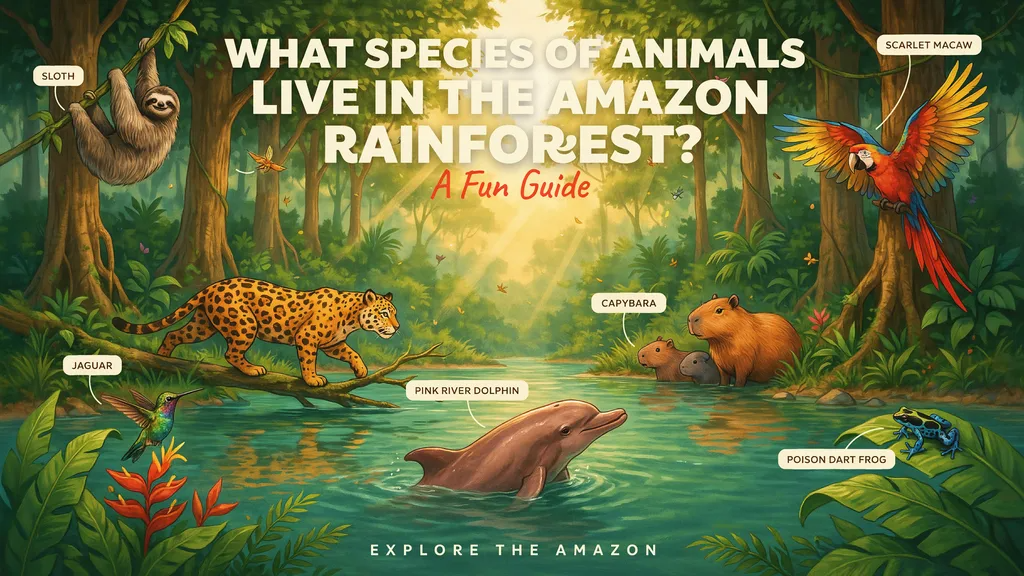
Pink River Dolphins Make a Splash
Did you know there are dolphins that live in freshwater rivers? The Amazon river dolphin, or boto, is bright pink! When we talk about what species of animals live in the Amazon rainforest, these friendly swimmers are a big surprise for many people. They swim through flooded forest trees during the rainy season to find small fish to eat.
Their neck bones are not fused together. This means they can turn their heads side to side in a funny way. Local stories say these smart swimmers are magical protectors of the river. Seeing a pink nose pop up above the muddy brown water is a moment you never forget. The winding rivers are just as busy as the land!
Poison Dart Frogs: Tiny and Bright
Do not let their pretty colors fool you! Poison dart frogs are very small, but they carry a big warning. When checking what species of animals live in the Amazon rainforest, these jewel-toned amphibians stand out. Their bright blue, yellow, or red skin tells other animals to stay far away. It is nature’s own neon stop sign!
These tiny hoppers get their special power from the small bugs they eat on the forest floor. Indigenous people long ago used this natural skin protection on their hunting tools. Even though they are dangerous to touch, they look like little pieces of living art sitting on a green mossy leaf. They are small wonders of the damp undergrowth.
Capybaras: The Giant Friendly Rodents
Meet the largest rodents in the whole world. Capybaras look like giant, furry guinea pigs, and they are super friendly. When exploring what species of animals live in the Amazon rainforest, you will often find these calm creatures near the water edge. They love to sit in the shallow mud to stay cool in the hot tropical sun.
Capybaras get along with almost everyone. Birds and monkeys even sit on their backs while they rest! They are great at swimming and can hold their breath underwater for up to five minutes. Seeing a family of them walking together is adorable. They show us that being big and gentle is a great way to live in the wild jungle.
Howler Monkeys: The Loudest Voices Around
Before you even see a monkey, you might hear a deep roar shaking the trees. That is the howler monkey! When finding out what species of animals live in the Amazon rainforest, these noisy primates win the volume prize. Their special throat bones let their calls travel for miles through the thick, green woods.
They spend their days munching on fresh leaves and hanging by their strong tails. Their tails act like an extra hand to hold onto branches safely. Even though their roar sounds scary like a big monster, they are actually quite peaceful plant-eaters. They just like to let the rest of the jungle know where their family group is hanging out.
Green Anacondas: Giants of the River Edge
The green anaconda is one of the heaviest snakes on Earth. When people study what species of animals live in the Amazon rainforest, these giant swimmers capture a lot of curiosity. They spend most of their time hidden in shallow water or muddy riverbanks. Their dark green and black spots help them blend into the shadows.
Anacondas are not poisonous. Instead, they use their strong muscles to squeeze and hold their food if they need to hunt. They move very smoothly through the water like a quiet wave. While they like their quiet space, they are an important part of the jungle balance. They remind us how wild and mysterious the deep river edges can be.
Piranhas: The Famous River Swimmers
Piranhas have a big reputation in movies, but the truth is quite simple. When learning what species of animals live in the Amazon rainforest, these small fish are very common in the rivers. They have shiny scales and sharp teeth. Most of the time, they eat sick or dead fish and help clean the river system.
They only get super active when the water gets low in the dry season and food is hard to find. I learned that local people swim in these rivers safely every day by knowing the right spots. They are just regular fish doing their job in a busy aquatic neighborhood. Nature keeps everything working in a neat circle.
Leaf-Cutter Ants: The Hardest Workers
Look down at the dirt path, and you will see a green line moving. Those are leaf-cutter ants carrying pieces of leaves that are bigger than they are! When asking what species of animals live in the Amazon rainforest, these tiny bugs show the best teamwork. They do not eat the leaves directly.
Instead, they take them underground to grow a special garden of mushrooms. Then, they eat the yummy mushrooms! Their underground homes are huge, with millions of rooms and workers. Watching them march in a neat line is like watching a tiny highway. They prove that you do not need to be big to do amazing things in the wild.
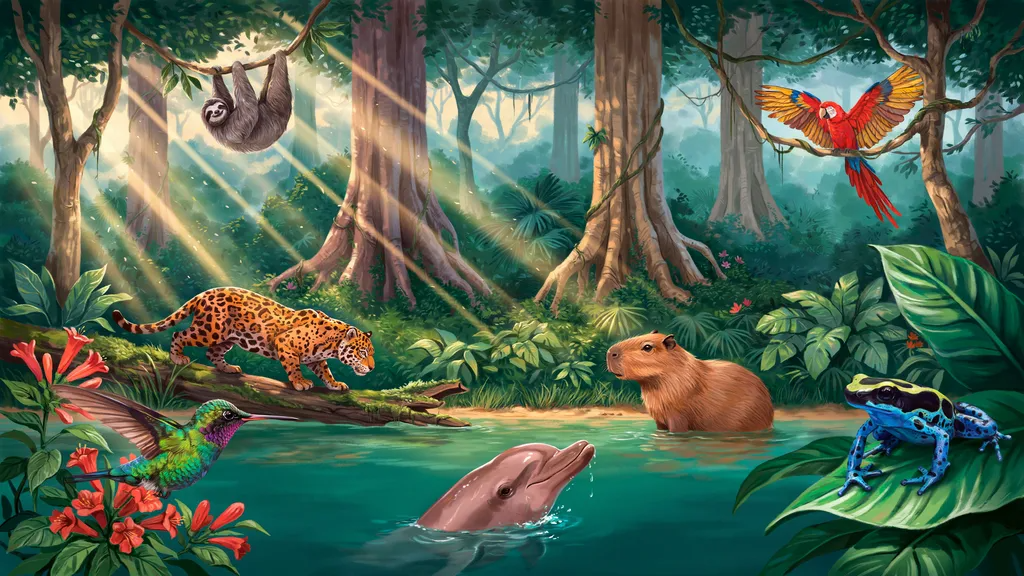
Complete Wildlife Detailing Table
| Animal Name | Main Habitat | What They Eat | Cool Fun Fact |
| Jaguar | Forest floor & rivers | Meat/fish | Loves to swim in water |
| Scarlet Macaw | High tree canopy | Nuts and seeds | Visits clay riverbanks |
| Three-Toed Sloth | High tree branches | Leaves and buds | Algae grows on fur |
| Pink River Dolphin | Amazon River | Small fish | Can turn its head sideways |
| Poison Dart Frog | Wet ground leaves | Small insects | Skin is brightly colored |
| Capybara | Riverbanks & mud | Grass and plants | Largest rodent on Earth |
| Howler Monkey | High in trees | Leaves and fruit | Loudest land animal |
| Green Anaconda | Swamps & rivers | Fish and mammals | One of the heaviest snakes |
| Red-Bellied Piranha | Rivers and streams | Fish and plants | Has very sharp teeth |
| Leaf-Cutter Ant | Underground nests | Fungus/mushrooms | Carries heavy leaf pieces |
Frequently Asked Questions
What is the most dangerous animal in the Amazon rainforest?
Many people think the jaguar or anaconda is the most dangerous, but tiny creatures like the mosquito carry more risks because of the illnesses they can spread. Most large animals prefer to stay away from humans.
Do pink river dolphins live in saltwater?
No, they live entirely in freshwater rivers and flooded forest areas. They are specially adapted to swim around tree trunks during the high flood season.
Why do poison dart frogs have bright colors?
Their bright skin is a warning sign to predators. It tells other animals that they taste bad and carry strong natural protection in their skin.
Are capybaras friendly to people?
Yes, capybaras are very calm and gentle. They are not aggressive and often let other animals and people get close to them without running away.
How loud is a howler monkey call?
A howler monkey call can be heard up to three miles away through the dense forest. It is one of the loudest sounds made by any land animal on the planet.
Do sloths move fast in the water?
Yes! Even though they are very slow and sleepy up in the trees, sloths are actually surprisingly good swimmers when they need to cross a river.
Conclusion
We have explored so many wonderful creatures today! Knowing what species of animals live in the Amazon rainforest shows us how rich and colorful our planet is. From the slow-moving sloth in the high branches to the bright pink dolphin in the river, every animal plays an important part in keeping this great green home alive.
The Amazon is a treasure chest of life that needs our care and protection. When we learn about these amazing animals, we care more about saving their homes. What is your absolute favorite animal from our list today? Leave a comment below and share your thoughts with fellow nature explorers!